
Matriarchal Society and the Position of Women
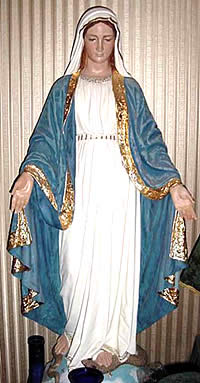
Q. I am very interested in the concept of matriarchal society, so I read with interest your piece on The Myth of the Myth of Matriarchy. One question, though. Some feminists have argued that in known societies where a mother Goddess is worshipped, the position of women is not better than in societies dominated by male religions.
Marina Warner in Alone of All Her Sex argues that the "Deification" of the Virgin Mary has even led to a worse social position for women.
Might this not dispose of the idea of ancient matriarchal society based on the dominance of Goddess images?
How do you respond to this?
A. In making this site we have become painfully aware of how very rare, in any patriarchal society, is a "pure" image of Dea – that is, Dea without a male "consort", "father", "son" etc.
The societies referred to by these critics, despite being, to whatever degree, "goddess-worshipping", are clearly patriarchal societies, and their iconography clearly shows it.
If we had the same evidence of these “Goddess-worshipping” societies as we have for pre-patriarchal societies, what should we find? Should we find a world in which all, or nearly all, images are feminine, and males, if they appear at all, appear in subordinate positions, as we do in pre-patriarchal societies?
We certainly should not. We should find pictures of kings and priests and of the powerful men who dominate every area of life.
The cultus of our Mother God is very potent. Wherever a society allows it, She tends to come back into religious predominance. Obviously we regard this as valuable and important. In the end, spiritual life is more important than material life, and the fact that our Mother God makes devotion to Her possible everywhere – and wherever possible She reappears in Her original Feminine Form – is one of the Graces that She bestows even in the depths of the patriarchal Kali Yuga. Yet this does not end the patriarchy or make Kali Yuga cease to be Kali Yuga.
Consequently, in all patriarchal versions of "Goddess worship", we see Her supposed "consorts" and other male appendages. Even in the most devout Mary-worshipping areas, how many pictures of Jesus, the Prophets, the Apostles and God the Father will you see?
Where Isis is worshipped you will see Osiris. Where Ishtar/Inanna is worshipped you will see Dumuzi/Tammuz. Where Quan Yin is worshipped you will see many male Buddhas: and all this is aside from the male-dominated secular imagery that abounds everywhere in such societies.
In pre-patriarchal societies the iconography is completely different from anything found in any patriarchal society, "Goddess-worshipping" or not. It is a wholly or predominantly feminine iconography throughout the society.
Thus the argument that the worship of a "goddess" does not improve the lot of women (socially speaking) in a patriarchal society may indeed be correct.
But to apply this to the profoundly female-centred iconography of prehistoric matriarchal society is really comparing apples with penguins.
What the radical change in iconography, found throughout the world, indicates is precisely that iconography is vital to the structure of a traditional society. Patriarchal societies seem to have needed to insert male images at every level into the formerly female-dominated iconography: because they certainly did it everywhere, with depressingly systematic regularity, regardless of whether their societies were "Goddess-worshipping" or not.
What does this logically indicate about societies where the female image was actually predominant throughout?
Send your Question or Comment on Matriarchal Society
See also:
The Feminine Heritage: learn the truth about "Matriarchy"
The Myth of the Myth of Matriarchy
Gobekli Tepe: The World's Oldest Temple
Send us your questions or comments
Chapel of Our Mother God Homepage
All written material at the Chapel of Our Mother God is copyright. Should you wish to reproduce any portion please contact us for permission.
Facebook or YouTube

This section:
Cycles of Time
Gospel of Our Mother God
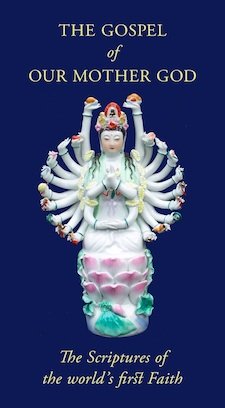
The Gospel of Our Mother God is a collection of inspirational texts, prayers and daily inspiration for the Mother-Faith devotee or household.
The Feminine Universe
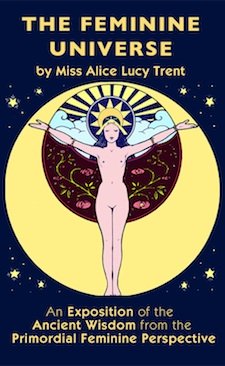
The Other Philosophy
Everything you have ever heard comes out of the patriarchal world-view. Its materialism, its religion, even its feminism. Here is the other way of seeing the world; the natural way: the way that everyone saw things before patriarchy and will again when patriarchy is long forgotten.